Company News | Sankawa Sangyo Visits TUSHUN New Materials for a Technical Exchange on Precision Foundry Sands
Facts at a Glance
-
Visiting organization: Sankawa Sangyo Co., Ltd. (Japan)
-
Host: TUSHUN New Materials Technology Co., Ltd.
-
Focus topics: Process compatibility of foundry sands (shell/resin-coated, cold-box, no-bake, binder-jet 3D printing); defect control (veining, burn-on/penetration, erosion, gas) and reclamation/TCO evaluation frameworks
-
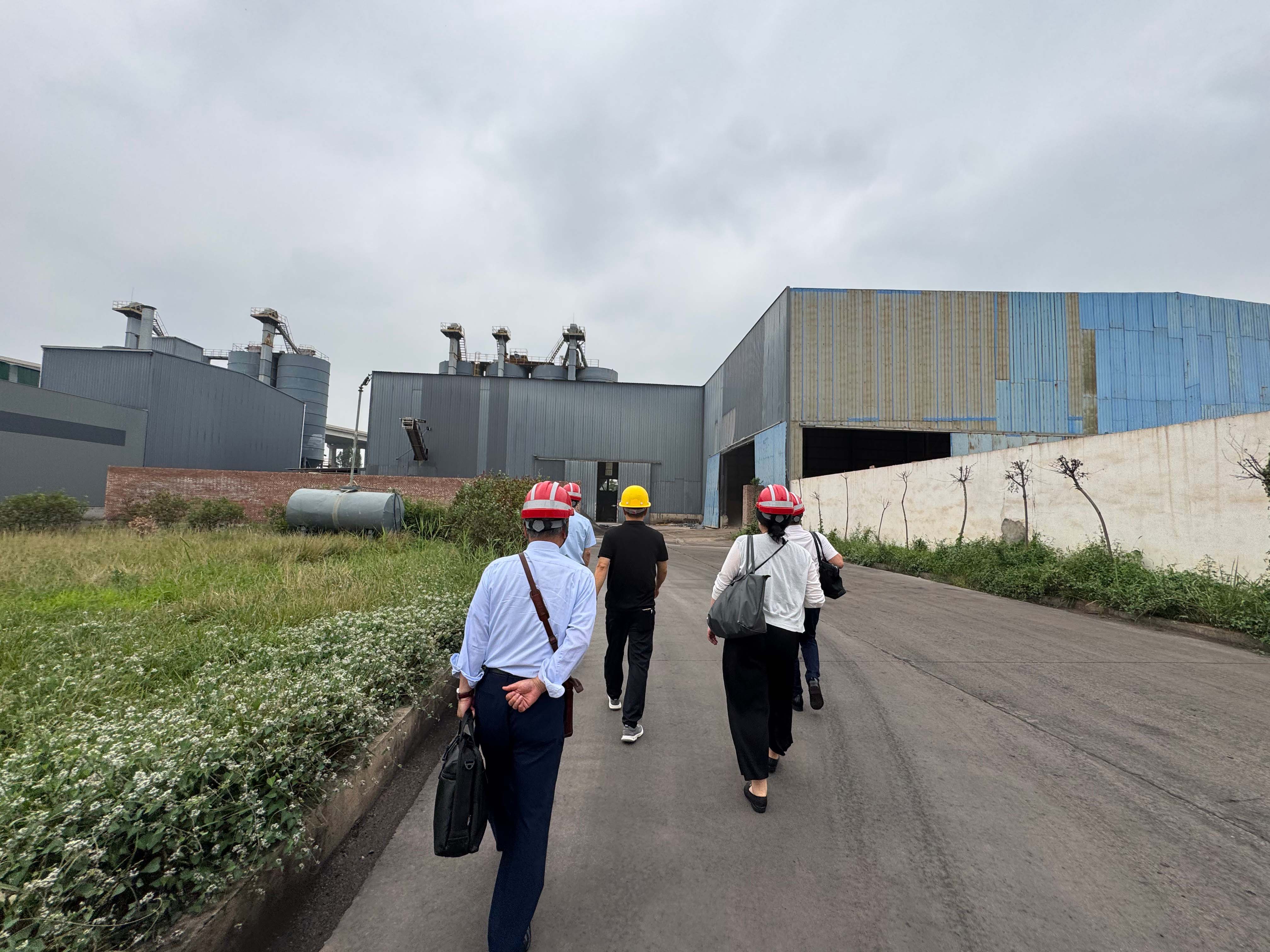
Tour path: Raw material → fused granulation → classification & screening → QA lab (thermal expansion, PSD/AFS, roundness, LOI/ADV) → packaging & warehousing → EHS & reclamation demo
-
Application interests (Japan): automotive & e-drive aluminum parts, general machinery and pumps/valves, and renewable-energy components
All data and demonstrations were provided solely to illustrate technical methods and benchmarks. They do not constitute specifications, offers, or supply commitments.
Technical Highlights
1) Material Characteristics & Measurement
-
Thermal expansion curve (600–1,000 °C): How flatter curves and controlled inflection points help reduce veining and dimensional drift.
-
PSD & tail control (D10/D50/D90, AFS ranges): Impact on flow, packing, release and thin-wall/deep-cavity behavior.
-
LOI & chemical compatibility (pH/ADV): Gas evolution and binder matching across PUCB, no-bake, resin-coated/shell, and binder-jet processes.
-
Reclaim stability: Combining mechanical and thermal reclaim to stabilize PSD and LOI over multiple cycles.
2) Process Fit & Defect Mitigation
-
Shell / resin-coated lines: Coating uniformity, shell strength, and surface roughness (Ra) control.
-
Cold-box / no-bake: Sand temperature & humidity management; framework for minimum viable resin dosage.
-
Binder-jet 3D printing: Recoating density, interlayer stability, and post-cure dimensional accuracy—typical pitfalls and diagnostics.
-
Fast checklist: Root-cause/monitoring/action tables for burn-on, penetration, erosion, and gas-related defects.
Use-Case Focus (Discussed Themes)
-
Automotive & e-drive aluminum castings: Dimensional stability and clean collapsibility as primary evaluation points for thin-wall housings, inverter covers, and battery trays.
-
General machinery / pumps & valves: Resistance to erosion and thermal shock for deep cavities and pressure sections.
-
Renewables & wind: Balancing deformation control, rework rate, and reclaimability on large bearing structures.
The above points summarize shared technical interests and do not indicate any consensus on particular products or acceptance criteria.
Proposed Evaluation Directions (Non-binding, for Consideration Only)
To streamline any future feasibility work, both sides discussed an optional framework (subject to written confirmation later):
-
Baseline data: If pursued, the requester would provide current casting baseline (scrap modes, Ra, machining allowance, sand temperature/humidity, reclaim curve).
-
Paired pilot trials (optional): Side-by-side molds/cores with comparative sand; record defect mix (veining/penetration/erosion/gas), fill time, release force, Ra, reclaim cycles.
-
Reclaim curve (optional): Track PSD/AFS, LOI, fines at reclaim cycles 3/5/8; evaluate stability and TCO impact.
-
Governance: Any next steps would require NDA, agreed test standards, and acceptance thresholds before execution.
These items reflect discussion only and are not commitments. Any progression or scope would depend on mutual written consent.
Quality & Compliance (Shared Practices)
-
Batch consistency & traceability: Retained samples, COA, barcode tracking; periodic re-checks for PSD/LOI/ADV and thermal points.
-
Standards alignment: Reference methods under ISO/JIS with bilingual (EN/JP) reporting as needed.
-
EHS topics: Dust/VOC control, solid-waste utilization, and experience with third-party audits.
Supply & Service Capability Overview (Informational Only)
-
Delivery & packaging: Ton-bags and small bags; labeling as requested.
-
Lead time & buffer: Typical stocking strategies and emergency switching plans introduced for reference only.
-
Technical support: Remote and, when appropriate, on-site assistance can be arranged subject to future agreement.
Appreciation & Next Steps
TUSHUN thanks the Sankawa team for an open, practical dialogue. Both sides agreed to keep communication channels open and to base any possible next steps on objective data and standardized test methods. Should sample evaluation or trials be considered later, both parties would first complete the necessary procedures (e.g., NDA) and confirm scope, methods, and criteria in writing.
Suggested Images (for the news page)
-
Meeting & technical discussion scene (Alt: Technical exchange meeting, no sensitive details).
-
QA lab demonstration (Alt: Thermal expansion and PSD testing setup).
-
Plant wide shot (Alt: Fused granulation and grading line, no close-ups of individuals).
Media & Technical Contact: zhyl7163@gmail.com
Company News: January 2026 — Indian Foundry Reduces Surface Defects After Switching to Fused Ceramsite Sand
Related Article