
Subscribe to our Newsletter
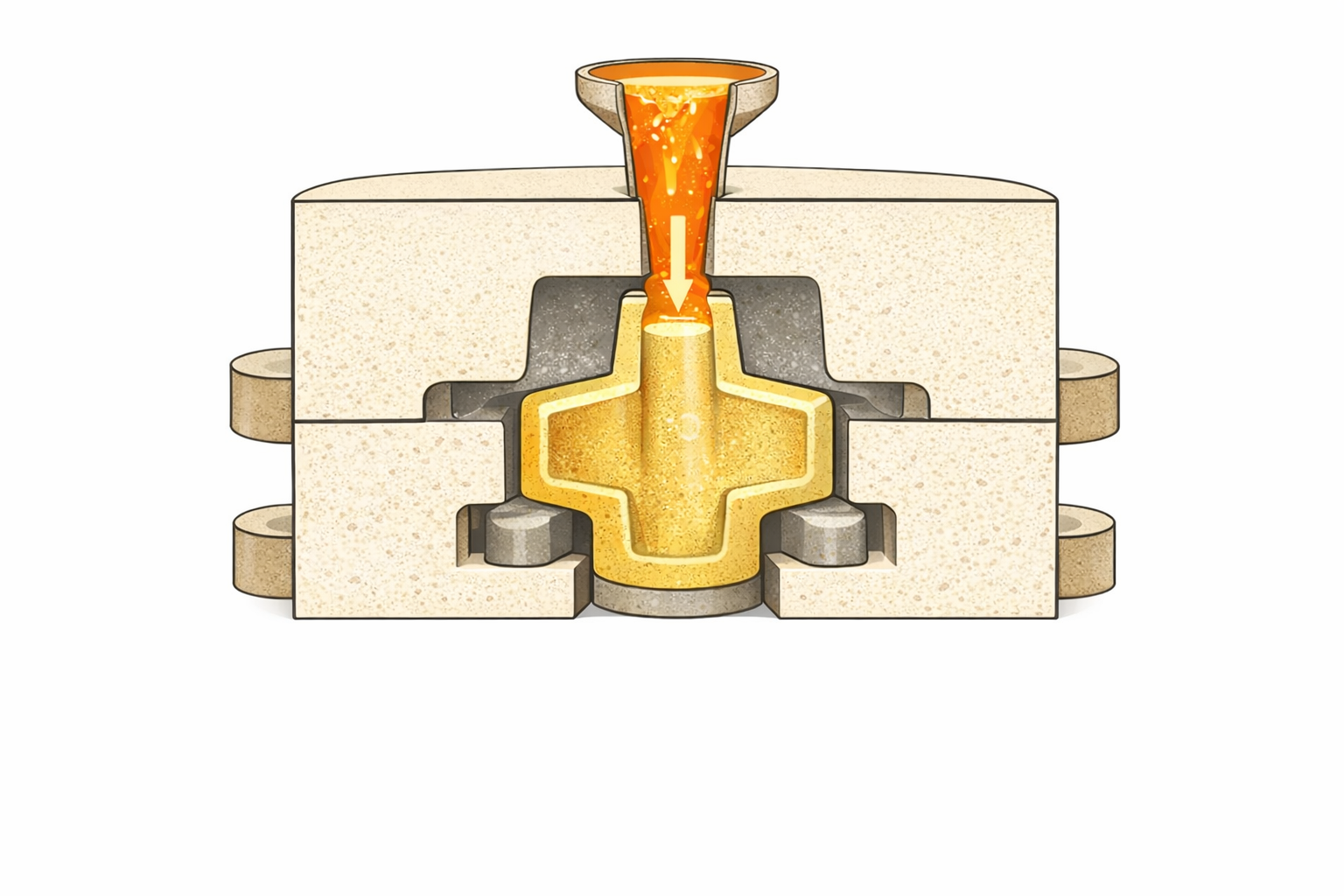 2026-01-27 | Alex ZhangTechnical Feature: How Sand Cores Are Made—and Where Fused Ceramsite Sand Adds Real Process ValueRead MoreSand cores are the “hidden tooling” of metal casting. They create internal passages and cavities that cannot be formed by the external mold alone—cooling channels, oil galleries, hollow structures, undercuts, and complex internal geometry. In many foundries, the majority of scrap and rework associated with internal defects can be traced back to core-related variables: core strength, gas management, thermal stability, dimensional repeatability, surface integrity, and collapsibility after pouring.
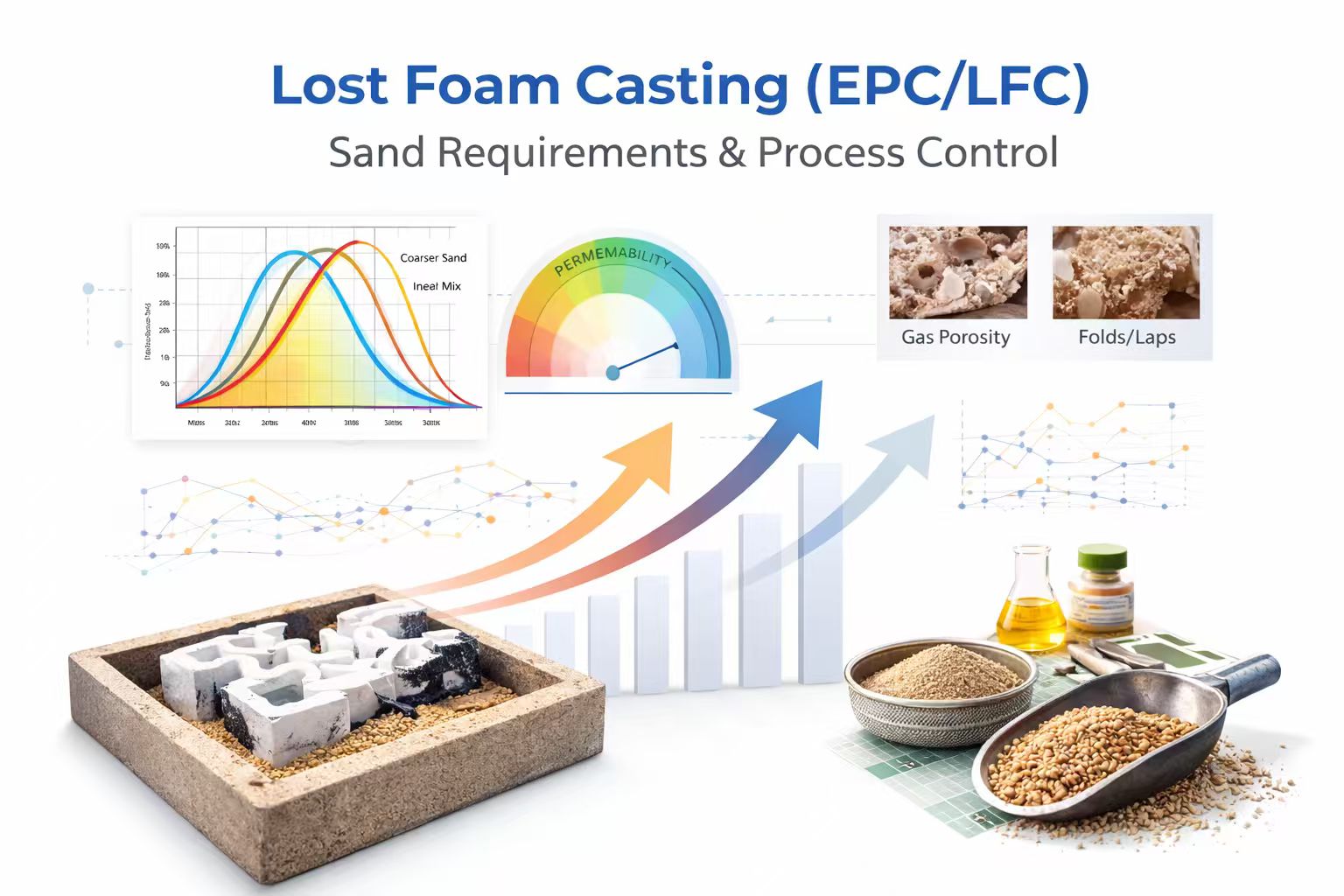 2026-01-07 | Alex ZhangProcess Matters: Why Lost Foam Casting (EPC/LFC) Demands a Different “Sand System”Read MoreLost Foam Casting—also called EPC (Evaporative Pattern Casting) or LFC (Lost Foam Casting)—is often described as a “no-parting-line” process. In reality, it’s a process where the foam-to-gas transition happens inside the mold while molten metal is filling. That single fact changes what “good sand” means.
 2025-12-18 | Haoyuan ZhangResin-Coated Sand (RCS) Plants, Unfiltered: Defect Mechanisms and a Repeatable Process WindowRead MoreOver the past quarter we audited two resin-coated sand (RCS) plants—one in East China, one in Southeast Asia—tracking material data from incoming base sand to cores, castings and reclamation. Their equipment and resin systems differed, yet the same patterns kept appearing: periodic spikes of gas-related defects, shell-strength variability, and burn-on/penetration clustered around hot spots when reclaimed sand “tail” growth went unchecked.
 2025-12-03 | Haoyuan ZhangSame AFS, Different Results: How Thermal-Expansion Curves Drive Veining and Dimensional DriftRead MoreTwo molding sands can share the same AFS number yet behave very differently in the mold. The missing piece is the thermal-expansion curve—the way a sand body expands between roughly 600–1000 °C, where most casting shells experience their peak thermo-mechanical stress.
 2025-11-01 | ZhangHaoyuanTechnical News | From Materials to Process Windows: A 2024–2025 Technical Map of Foundry SandsRead MoreWith lightweighting, environmental compliance, and digital control advancing in parallel, foundry sand is no longer a passive filler—it is a process-critical medium that governs dimensional stability, surface finish, and total cost of ownership (TCO). This report consolidates 2024 practice across plants and labs and outlines what to watch in 2025, from material families to testable metrics, process fit, defect mechanisms, and reclamation loops.
- 1